
This blog post was written by MARMIA’s 2024 summer intern Nora Dunne. Nora is completing her Masters in Library and Information Science at the University of Maryland, College Park. Nora lives in Baltimore by way of Chicago, and enjoys books, stained glass, and travel. Her summer project focused on creating a finding aid for one of MARMIA’s home movie collections.

My interest in old film springs primarily from the aesthetic pleasures of grainy, flickering light. The gritty transitions are oddly mesmerizing, but I never thought past the visuals to the technicality of viewing old film from my modern perspective. Despite my lack of preservation expertise, my archival interests led me to an exciting opportunity with MARMIA. This summer I’ve been completing a field study as the final component of my MLIS degree, and I’ve been enjoying everything I’m learning through the process.
Coming from an archival background, preservation is of course of the utmost importance. I’ve been haunted since coming across a figure a few years ago – that some fifty percent of films made before 1950, and some ninety percent of films made before 1929 are lost forever. This loss is devastating in its own right, but even more worrisome because despite our cultural awareness, ‘modern’ technology is equally vulnerable to the same rapid obsoletion. The last VHS was released in 2006, and not even twenty years on we have seen a string of formats rise and fall in its wake. Archivists are adapting to the prevalence of ‘born-digital’ material and do well to learn from the successes and failures of past preservation attempts.
My work this summer has focused on The Ernest W. Ryan Home Movie Collection, a donation of five 8mm reels of home movies from Maryland resident Susan Hebble, whose grandfather captured their family’s everyday life in the late 1950s. MARMIA had digitized these films upon their donation in 2017. After watching the films I conducted an oral history with the donor to speak about her recollections of the content of the films and her personal family story. She recalled conventions of the time, notable Baltimore landmarks and Maryland traditions. With her insight I drafted a finding aid for the collection to describe its contents and scope.
Through this oral history I was able to research historic regional landmarks. The films feature The Casablanca – an iconic jazz club and venue in Baltimore’s Liberty Heights neighborhood that later became the Sportsmen’s Lounge, and the well-loved Zim Zemeral Big Band, a swing orchestra popular at area weddings over the decades. Our donor also elucidated footage of the Chesapeake Bay Bridge as it is captured in a 1956 film, only four years after its completion and when it was just a single lane span. The family films also share glimpses of Maryland vacation spot Ocean City, including the famous Peter Pan Inn in Urbana with its hushpuppies and Planter’s Punch.
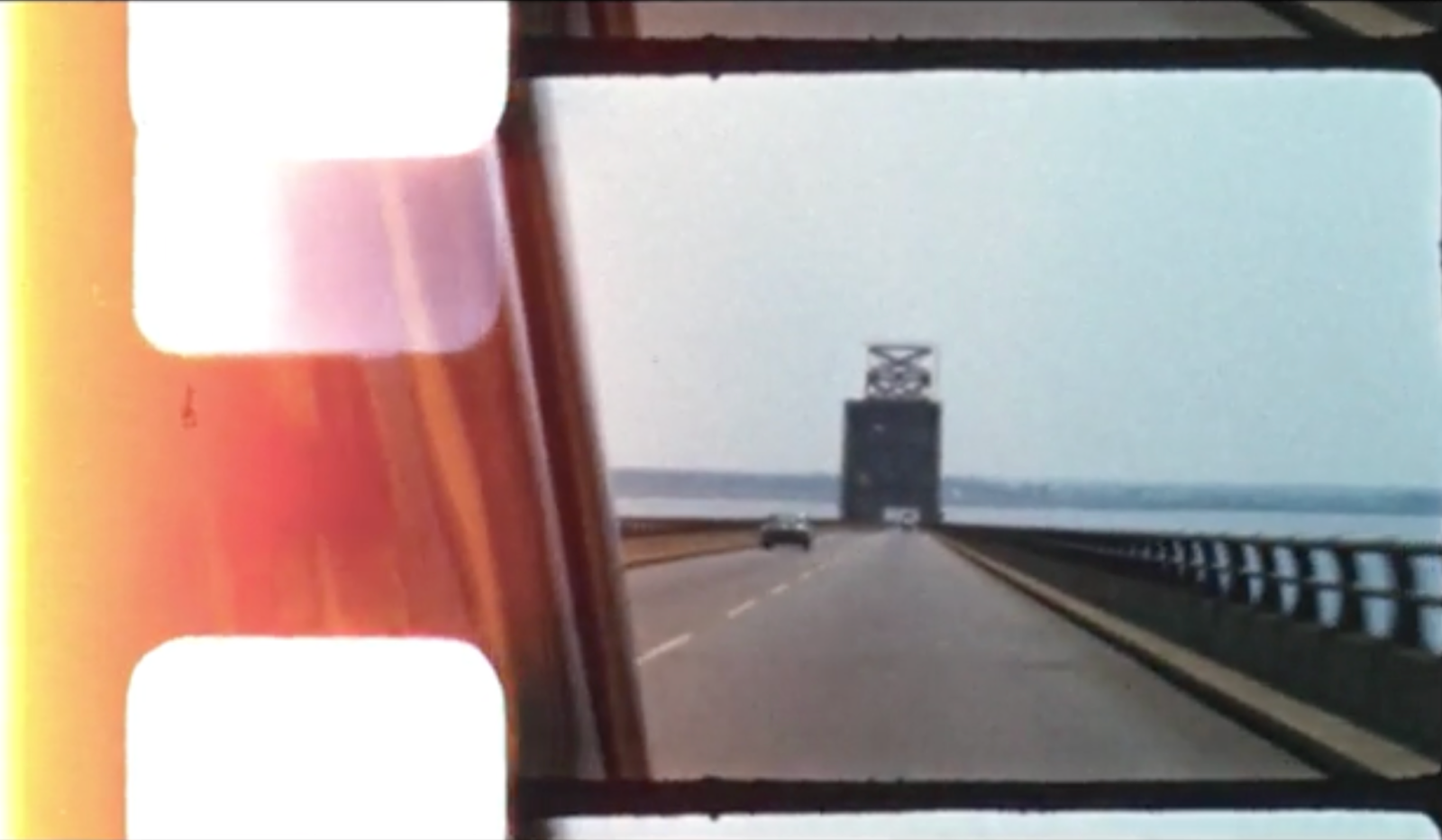
A shot of the Bay Bridge as a single lane, from the Ocean City film in the Ryan Collection.

A shot of the Peter Pan Inn in Urbana, Maryland from the Ocean City film in the Ryan Collection.
Equally illuminating was the donor’s recollections of past conventions, such as the white gloves and Easter dresses that she wears in one scene captured in the film. She joked about how kids today have no idea what her generation had to put up with, and how she and her friends laugh about it now – how their mothers made them put on their little white gloves and hats each Sunday, even to go shopping at the department stores downtown.
Also notable in the films is a scene of someone shoveling heaps of snow from the street and sidewalk. The donor recalled her mother mentioning a significant snow storm in Baltimore when she was only an infant, in the winter of 1956. Recent years have seen little to no snow in the area, and while the film only captures this one instance of extreme weather, the contrast is fascinating to observe.
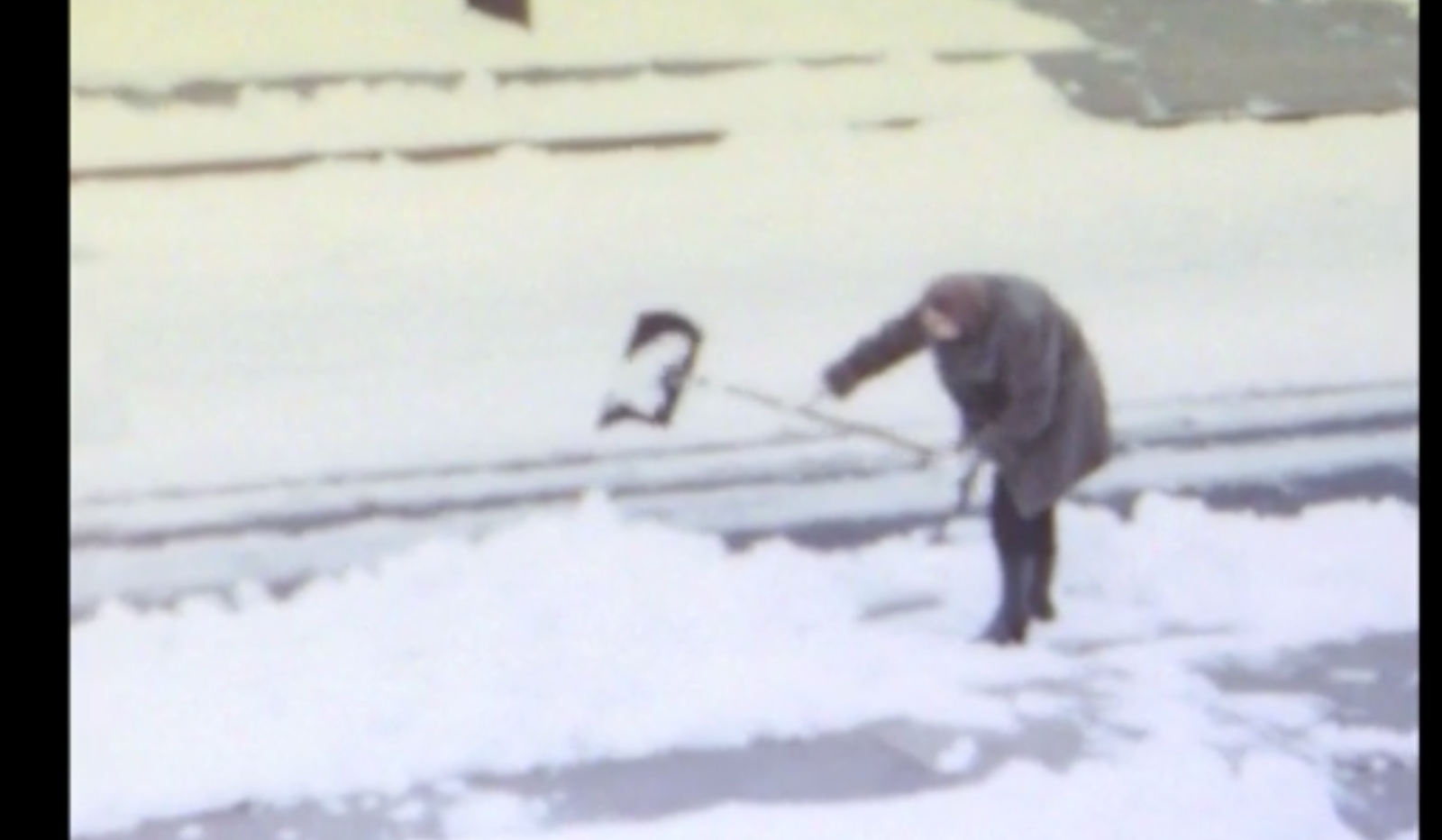
Shoveling snow in Baltimore, from Home Movies 1 in the Ryan Collection.
We can glean so much about the past through these slice-of-life films. The amateur records hold as much weight as large scale cultural records like the WJZ-TV collection, and through preservation of them both we gain a greater understanding of the past. MARMIA’s commitment to preservation and access is inspiring, and I’m glad I had the opportunity to observe it in action this summer!

 marmia.org
You must be logged in to post a comment.